
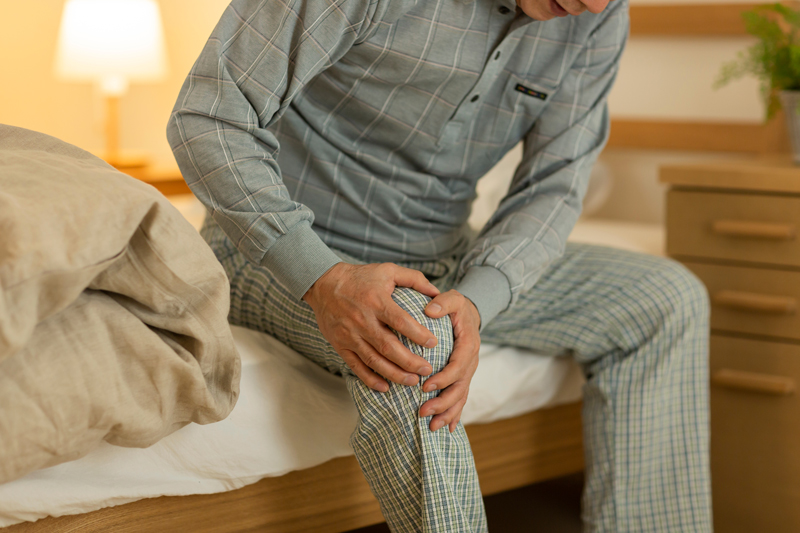
There are many reasons why legs can ache at night. This can be due to a muscle spasm, overuse, nerve irritation, varicose veins, chronic venous insufficiency, and other circulatory issues. How the pain is felt, the location of the pain, and whether there is swelling associated can help determine why the legs are aching.
Some people will notice that their legs ache following a long day of physical activity. Others notice it once they lie down and stop moving. If the pain is frequent, affecting sleep, or is associated with swelling, then you should look into why this could be happening.
Common Reasons Your Legs Ache at Night
1. Varicose Veins and Venous Reflux
Varicose veins can cause aching, heaviness, throbbing, swelling, and nighttime cramping. These symptoms may become more noticeable after a day spent standing or sitting because blood can collect in the lower legs when vein valves are not working properly.
Chronic venous insufficiency, or CVI, develops when weakened vein valves allow blood to flow backward instead of continuing toward the heart. By the end of the day, increased pressure in the veins can leave the legs feeling sore, tired, heavy, or uncomfortable.
Signs that nighttime aching may be related to your veins include:
- Leg heaviness that builds during the day
- Ankle or lower-leg swelling
- Visible varicose veins
- Itching or skin discoloration near the ankles
- Nighttime cramping
- Symptoms that improve after walking or elevating your legs
A duplex ultrasound can help determine whether venous reflux is contributing to your symptoms and which veins may be involved.
2. Nighttime Leg Cramps
Nighttime leg cramps are sudden, involuntary muscle contractions that commonly affect the calves, feet, or thighs. They can wake you from sleep and leave the muscle sore or tender afterward.
Many nighttime cramps have no obvious cause, but they can be associated with muscle fatigue, prolonged sitting, overuse, pregnancy, certain medications, dehydration, and some medical conditions. A cramp usually feels different from the dull aching or heaviness associated with vein disease because the muscle often tightens suddenly and may feel hard or knotted until the cramp passes.
3. Muscle Overuse or Fatigue
A long day of walking, exercise, standing, or physical work can leave the leg muscles sore by the time you get into bed. Overworked muscles may ache, feel tight, or cramp once you stop moving, especially after a day that involved more activity than usual.
If the soreness clearly follows a physically demanding day and improves with rest, gentle stretching, or recovery, muscle fatigue may be the likely explanation. If the pain keeps returning even without increased activity, another cause may be worth considering.
4. Nerve-Related Pain
Not all nighttime leg pain comes from muscles or veins. Nerve irritation can cause burning, tingling, numbness, shooting pain, or a pins-and-needles sensation that may become more noticeable when you are resting.
Problems involving the lower back, peripheral nerves, or conditions such as diabetic neuropathy can all cause leg discomfort at night. Pain that feels burning, electrical, numb, or tingling is more suggestive of a nerve problem than the dull aching or heaviness often associated with venous disease.
5. Restless Legs Syndrome
Restless legs syndrome can also cause uncomfortable sensations at night, although it usually feels different from a muscle cramp or vein pain. People often describe crawling, tingling, pulling, or an overwhelming urge to move their legs.
Movement usually provides temporary relief, which can help distinguish restless legs syndrome from other causes of nighttime leg pain. If moving your legs consistently makes the discomfort ease, it may be worth discussing restless legs syndrome with your healthcare provider.

Why Do My Legs Ache More at Night?
Nighttime can make certain types of leg discomfort more noticeable because you are no longer moving around. During the day, walking activates the calf muscles and helps push blood upward through the veins, while remaining still for long periods can allow blood and fluid to collect more easily in the lower legs.
For people with venous insufficiency, symptoms often build throughout the day because prolonged sitting and standing increase pressure in the leg veins. By bedtime, the legs may already feel tired, swollen, achy, or heavy. Muscle fatigue can follow a similar pattern, especially after a day with more walking, exercise, or physical activity than usual.
How Can You Tell if Nighttime Leg Pain Is Vein-Related?
Vein-related pain often follows a recognizable pattern. The legs may feel heavy, achy, swollen, or tired after being upright for several hours, and symptoms often become more noticeable later in the day.
Visible varicose veins, ankle swelling, itching, skin discoloration, or nighttime cramps can make a venous cause more likely. If your discomfort improves with walking or leg elevation but keeps returning, a vein evaluation may help determine whether venous reflux is involved.
What Can Help Aching Legs at Night?
What helps depends on the cause, but a few simple habits may provide relief when there are no warning signs of a blood clot or another urgent condition. Gentle movement, leg elevation, stretching, and avoiding long periods in one position can all help reduce discomfort in some people.
Helpful steps may include:
- Take a short walk: Gentle movement can activate the calf muscles and support circulation.
- Elevate your legs: Raising your legs while resting may reduce swelling and pressure.
- Stretch your calves: Gentle stretching may help if nighttime cramps are part of the problem.
- Take movement breaks during the day: Avoid sitting or standing in the same position for several hours.
- Use compression when recommended: Medical-grade compression stockings may help some people with venous symptoms.
If the pain continues despite these measures, the next step is figuring out what is causing it rather than repeatedly treating the symptom.
When Should Nighttime Leg Pain Be Evaluated?
Aching legs can be common, but if you have constant pain in your legs at night and find it’s affecting your sleep regularly, it might be worth getting it checked out. If you’re experiencing symptoms such as swelling, a heavy feeling in your legs, obvious veins, changes in your skin, numbness, and tingling, then you should consider getting checked.
Consider scheduling an evaluation if you notice regular ankle or lower-leg swelling, varicose veins, leg heaviness, throbbing, frequent nighttime cramps, skin discoloration, itching, or pain that continues to worsen over time.
When Is Leg Pain at Night an Emergency?
Most nighttime leg aching is not an emergency, but sudden changes should not be ignored. If one leg suddenly becomes swollen, warm, red, tender, or painful, prompt medical evaluation is important because these symptoms can occur with deep vein thrombosis, or DVT.
Seek emergency care if leg symptoms occur with chest pain, sudden shortness of breath, fainting, rapid breathing, or coughing up blood. These can be warning signs of a pulmonary embolism. Severe pain in the foot or leg while resting, especially if the foot becomes cold, pale, discolored, or develops a wound that is not healing, also needs urgent evaluation.

How Are Vein-Related Nighttime Leg Symptoms Diagnosed?
Your symptoms will be discussed, including when you get pain, what makes them better or worse, and if you have any swelling or obvious veins. An examination of your legs may also be performed to check for varicose veins, tenderness, skin changes, and swelling.
An ultrasound scan called a duplex scan may also be recommended to look at the veins. This noninvasive test can show how blood is moving through the veins, whether weakened valves are allowing blood to flow backward, and which veins may be contributing to your symptoms.
How Are Vein-Related Aching Legs Treated?
The treatment depends on the cause and severity of your symptoms. Patients often start with exercise, elevation of the legs, regular movement, and compression where appropriate if they have mild or intermittent symptoms.
If venous reflux is found, treatment may include radiofrequency ablation, VenaSeal™, sclerotherapy, ultrasound-guided foam sclerotherapy, or microphlebectomy. Your provider can recommend an option based on your symptoms, vein anatomy, and ultrasound findings.
Find Out Why Your Legs Ache at Night
Pain in your legs at night can be caused by muscle fatigue, cramps, nerve issues, or circulation problems. If nighttime discomfort keeps returning and occurs with swelling, heaviness, varicose veins, or other changes in your legs, an underlying vein problem may be contributing.
At Vein Institute, we evaluate symptoms such as aching, swelling, cramping, and heavy legs and use duplex ultrasound when needed to look for venous reflux. If leg discomfort keeps you awake or continues to return, call (203) 426-5554 today to schedule an evaluation.