
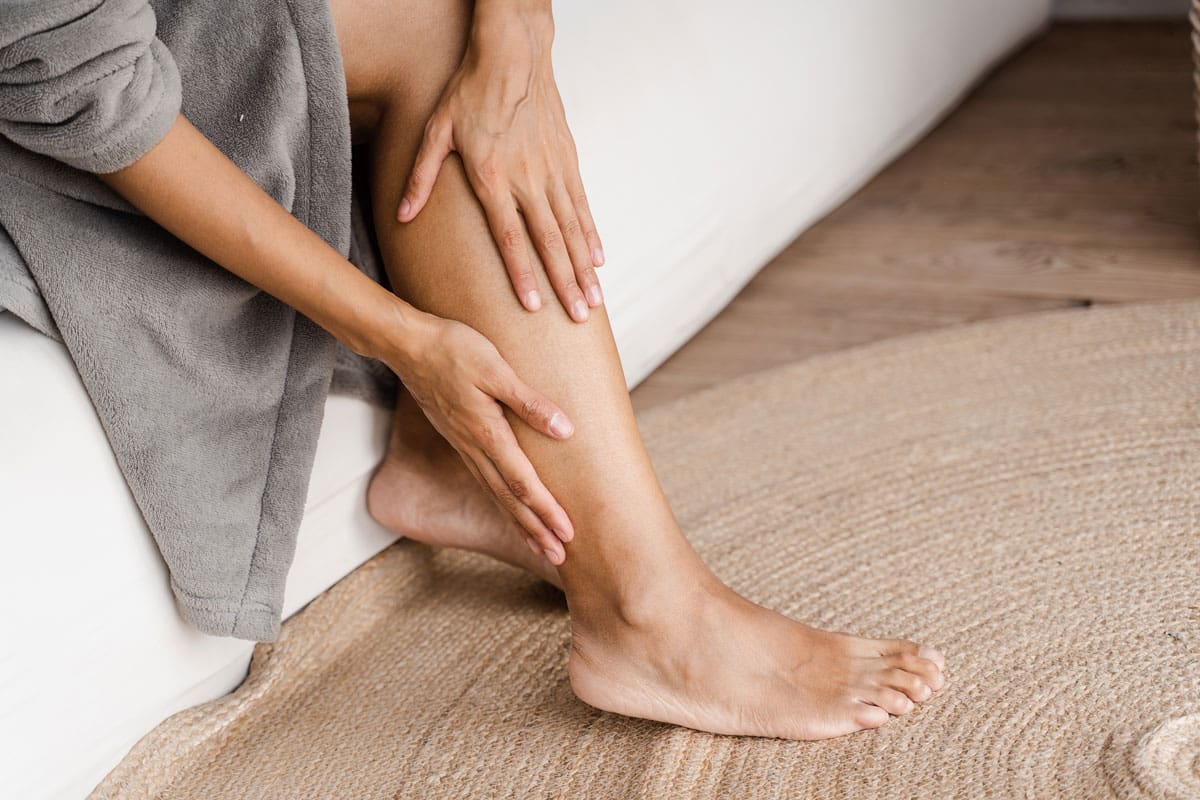
You are fast asleep when a sharp calf cramp wakes you suddenly. For many people, this is an all too familiar experience. Leg cramps are very common for a lot of us, and yet not all cramps are caused by the same thing. So, how do you distinguish what you’ve got and when to get it checked out?
Most Common Reasons For Leg Cramping
- Overuse or exhaustion from the day or after exercise, especially uphill walking
- Dehydration or low electrolytes (Low Sodium & Potassium & Magnesium)
- Excessive sitting or standing, which works on the calf muscles or tends to shorten them
- Issues with footwear: unsupportive shoes, high heels, worn soles
- Side effects of medications (diuretics, statins, asthma medications)
- Pregnancy or aging (muscle and nerve changes)
- Vein problems: heaviness or swelling (insufficiency of veins)
- Peripheral artery or nerve problem (PAD, sciatica), less common, but must be ruled out
How to Tell the Difference
Typical “Charley Horse”
- Sudden contraction of calf or foot muscles
- Often at night or after exercise
- Muscle is like a knot; stretching alleviates
Cramp with Vein Problems
- Swelling, Tingling, or Aching Around the Ankle Region in the Evening
- Varicose veins that can be seen or felt
- Leg Elevation or Compression Socks for Relief: These are indicative of chronic venous insufficiency (CVI), which occurs when valves in the veins are ineffective, resulting in blood pooling in the lower leg.
Muscular Cramping due to Artery and/or Nerve
- PAD (Arteries): Pain or tightness when walking, relieved by stopping activity, and feet feeling cool and pale.
- Nerve-related: Burning, tingling, or numbing; Back pain or pain that shoots down to the leg
These symptoms sound familiar? Seek medical advice.
Fast Relief When Your Legs Start Cramping
- Gently stretch the calf: pull toes toward your shin; hold 20–30 seconds, repeat.
- Stand and press the heel down while bending the front knee (wall stretch).
- Massage the knot and apply warmth (shower/heating pad).
- Hydrate, sip water or an electrolyte drink.
- Take a minute to walk it off and restore normal muscle tone.
Preventing Future Leg Cramps
Daily Habits
- Hydrate steadily (more with heat, exercise, or caffeine).
- Light stretching exercise: calves, hamstrings, hip flexors. Morning, night.
- Supportive footwear with adequate arch support; change worn-out shoes.
- Ease into exercise by introducing intensity and cooling down.
- Smart desk use: alternate posture every 30-60 minutes; short walks can help.
Electrolytes & Nutrition
- Electrolytes: Get them from food sources (leafy vegetables, bananas, beans, yogurt, nuts).
- If you’re taking supplements, don’t overdo them, and talk with your healthcare professional, particularly if you’re taking magnesium or potassium and medications for your heart and/or blood pressure
For Night Leg Cramps
- Calf stretch before bed and after getting up at night.
Loosen bedding so toes aren’t pointed down all night. - Consider short evening walk to settle restless legs.
When Leg Cramps Mean See a Doctor
- Cramps are frequent, worsening, or disrupting sleep despite self-care
- You notice leg swelling, skin changes, or bulging veins
- Pain with walking that improves with rest (possible PAD)
- New cramps after a medication change
- One calf is swollen, warm, and tender (rule out a blood clot)
Could It Be Your Veins?
If your cramps are accompanied by heaviness, swelling, or visible varicose veins, your valves are possibly not pumping the blood back up towards your heart. A rapid duplex study will assess where the blood is flowing. Alleviating your vein problem may relieve your nighttime cramping, pressure, or the sensation of a brick on your leg during the daytime.
Vein Treatment Options for Leg Cramping
- Radiofrequency ablation: Seals the faulty vein through a tiny catheter; local anesthesia; back to daily life fast.
- VenaSeal™ adhesive closure: Closes the vein without heat; stockings are often optional after.
- Sclerotherapy: Injections that fade spider and small varicose veins.
Most care is in-office with little downtime. Many medically necessary treatments are covered by insurance when symptoms and an ultrasound show reflux.
A Simple Plan to Reduce Leg Cramps at Home
- 6-8 glasses of water, Calf/Hamstring stretches (5 minutes)
- 3–4x/week: 20–30 minutes of walking or cycling
- Workdays: Stand up or move every 30–60 minutes
- Evenings: Legs up for 10–15 minutes; light stretch before bed
- Gear: Compression Socks for Long Flights, Car Rides, or Standing Shifts
Solutions Today and When to Seek Vein Treatment
Most leg cramps improve with hydration, stretching, smart training, and better footwear. If cramps ride along with swelling, heaviness, or varicose veins, Vein Institute can check your circulation, perform an ultrasound if needed, and recommend a plan that helps you sleep and move more comfortably.
Ready to start feeling better? Get in touch to set up a quick visit in the area. Hear your story, see what is going on, and develop a plan that is right for you.